
Quick answer: You cannot stop seasonal shedding — it is a healthy coat doing its job — but you can decide where the fur ends up. Regular short deshedding sessions move loose hair onto a brush instead of your sofa, and a simple household routine handles the rest. Sudden, patchy, or itchy hair loss is different: that is a question for your veterinarian.
Every spring, a wave of owners asks how to make the shedding stop. The honest answer: it does not stop, and it should not — shedding is how a coat renews itself and adjusts to the season. What actually changes homes is redirecting that fur. Here is the routine we recommend, anchored by the tool our customers buy more than anything else in the store.
Why the fur storm is normal
Coats respond to changing daylight and temperature. Many dogs shed noticeably as warm weather arrives, and many double-coated breeds shed again in fall as the summer coat swaps for a winter one. Indoor living muddies the signal — climate control means some dogs shed moderately all year instead of dramatically twice. All of this is ordinary. The goal is management, not elimination, and anyone promising elimination is selling something we would not.
The core move: brush on your schedule, not the couch's
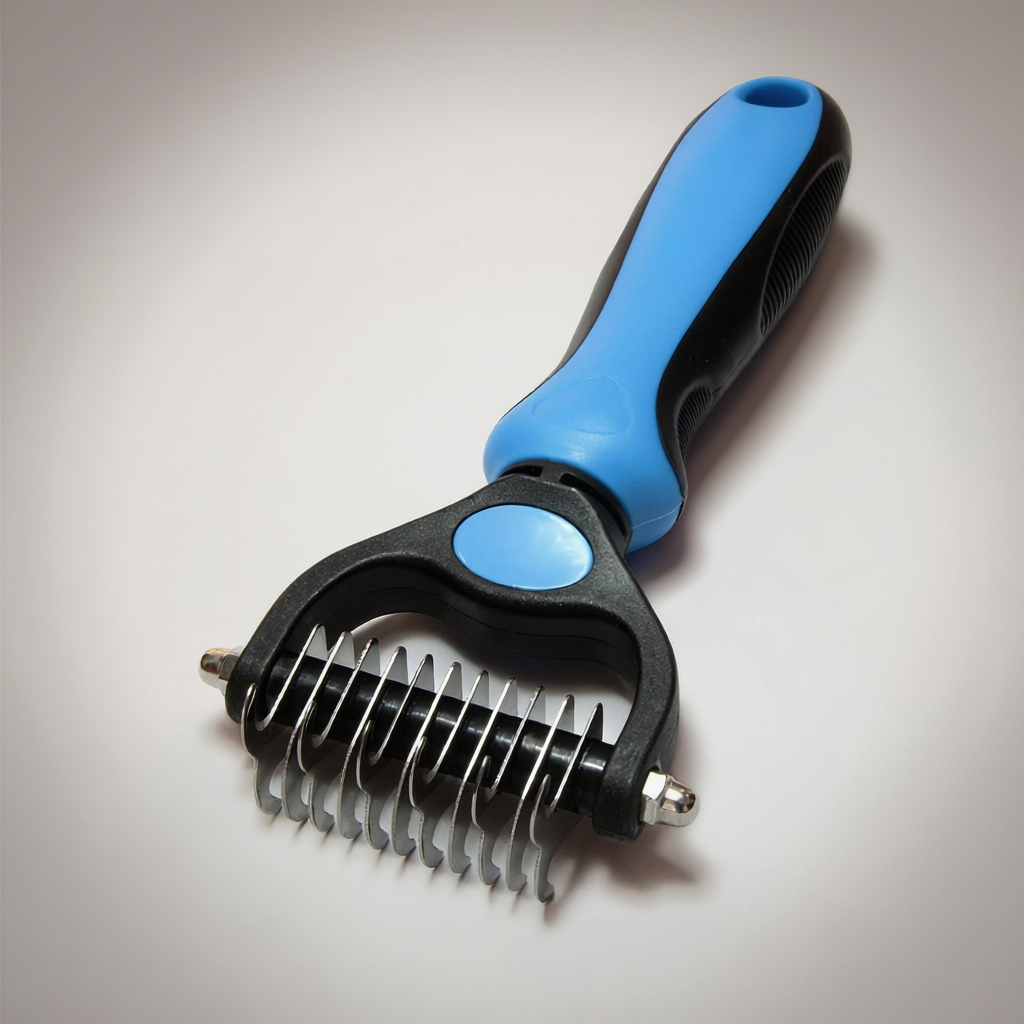
A deshedding session collects hair that was leaving anyway. Our double-sided grooming brush ($12.99) — 107 sold since mid-January 2026, our store's number one — uses a 17-tooth side to lift loose undercoat and stray fibers. Work with the direction of growth in light, steady passes, clearing the head often so the teeth keep pulling evenly. Its listing suggests two to three short sessions a week, adding one more during heavy shedding — and specifically warns against long marathons and wet fur. If knots have formed, deal with them first using the 9-tooth side; our brush technique guide walks through both.
Small habits that multiply the payoff
Brush outdoors or on hard flooring when you can, so escaped fur sweeps up instead of weaving into carpet. Wash pet bedding regularly — it is the densest fur reservoir in the house. Put a washable blanket on your dog's favorite furniture spot and launder it on rotation. Keep a lint roller near the door and vacuum the high-traffic zones a little more often during peak weeks rather than deep-cleaning once a month.
| Task | Frequency in shedding season | Why it works |
|---|---|---|
| Deshedding session | 3-4 short sessions weekly | Captures loose undercoat before furniture does |
| Wash bedding & throw blankets | Weekly-ish | Removes the biggest fur reservoir |
| Vacuum high-traffic zones | Every few days, briefly | Frequent light passes beat rare deep cleans |
| Clean the brush head | Every session | Clear teeth lift fur consistently |
What not to do
Do not shave a double-coated dog to "fix" shedding — that coat insulates in both directions, and most grooming professionals advise against shaving it; if you are considering a big cut for comfort, talk to a groomer or your veterinarian first. Do not over-bathe to chase loose fur, since too-frequent washing can dry out skin. And do not brush a soaked coat: the brush is designed for dry fur, and tangles tighten when wet.
When shedding is a symptom, not a season
Seasonal shedding is even, itch-free, and leaves healthy coat behind. See your veterinarian instead of your brush if you notice bald patches, thinning in defined spots, redness, flaking, sores, constant scratching, or a coat that suddenly looks dull and brittle. Those patterns can point to skin, parasite, or health issues that grooming will not solve — and might irritate.
Frequently asked questions
Is my dog shedding too much?
Even, itch-free shedding that ramps up with the seasons is generally normal, even when the volume is impressive. Bald patches, defined thin spots, redness, constant scratching, or brittle coat are the signs worth a veterinarian visit.
Does brushing actually reduce shedding?
Brushing does not slow the shedding itself - it collects hair that was already loose so it ends up on the brush instead of your floors and clothes. That concentration into one session is the entire, honest benefit.
Should I shave my double-coated dog for summer?
Generally no. A double coat insulates against heat as well as cold, and most grooming professionals advise against shaving it. If your dog seems to struggle in warm weather, ask a groomer or your veterinarian about better options.
What time of year is shedding worst?
For many dogs, spring brings the heaviest shed as the winter coat releases, and many double-coated breeds shed again in fall. Dogs living mostly indoors under climate control often spread it out and shed moderately year-round.
How long should a deshedding session take?
Short is fine - a few focused minutes, two to four times a week, outperforms an occasional hour-long marathon. Stop while your dog is still relaxed and the next session will start easier.
More from the Pup R Us blog
- How to use a dematting & deshedding brush the right way
- Grooming routines by coat type — short, long, and double coats
- Cat gear at Pup R Us — the brush works on cats too
- Shop brushes & deshedding tools
Sales figures cover orders from January 16 to July 16, 2026. Prices are current as of publication and may change — see the product page for the latest details. Shedding guidance here is general and not veterinary advice; consult your veterinarian about unusual hair loss or skin changes.