
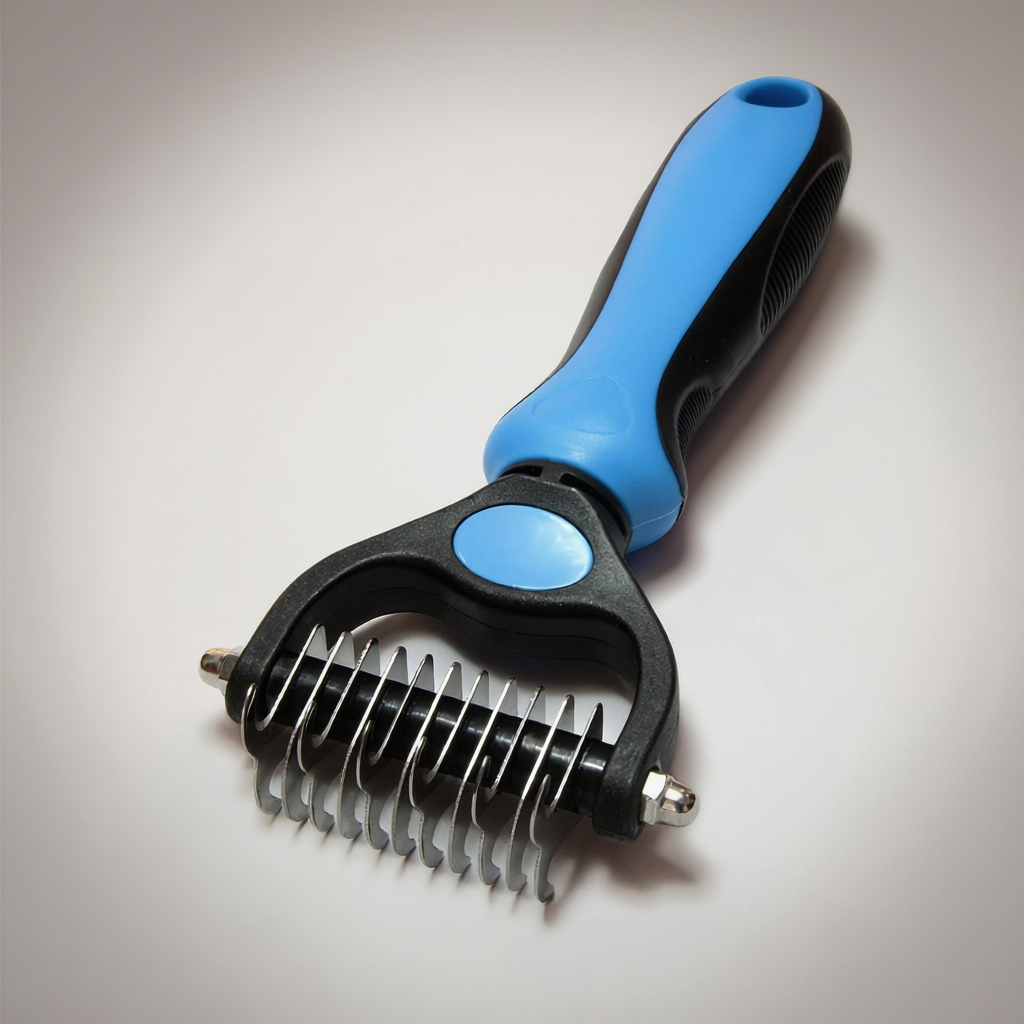
Quick answer: Dematting deals with tangled or compacted fur; deshedding removes loose hair. Neither job means forcing a rake through a tight mat. Choose the tool for your pet’s coat, inspect the skin first, and stop if there is pain, resistance or irritation.
A double-sided grooming brush puts two tooth arrangements on one handle, but that does not make it suitable for every coat or every knot. This guide explains how to decide whether gentle home grooming is appropriate before reaching for either side.
Dematting vs deshedding: know which job you're doing
Mats are tangled clumps of fur; shedding is the release of loose hair. Loose hair does not always mean undercoat: coat types differ. For the broader tool choice, see our grooming guide by coat type.
A slicker brush is not automatically inferior to a rake. VCA’s veterinary guidance describes different tools for different coats, including slickers for curly coats. Ask your groomer or veterinarian which tool suits your animal.
How to identify the two sides
Compare the tooth spacing and intended use in the instructions supplied with your actual tool. A wider-spaced side may be described as a dematting side, while a closer-spaced side may be intended for loose hair. Tooth counts and head sizes vary between products; neither rounded tips nor a “gentle” label make excessive pressure safe.
See the Double Sided Dog And Cat Grooming Brush for current product details. Confirm suitability for your pet with a groomer before purchase, particularly for a cat, a sensitive area or a coat you have not groomed before.
Before brushing: loose hair, small tangle or tight mat?
- Loose hair with no resistance: routine gentle grooming with a suitable tool may be appropriate.
- A small, loose tangle: work only if it separates gently and the pet remains comfortable.
- A dense mat close to the skin: stop and arrange professional help. Do not push teeth beneath it or use scissors.
A cautious home-grooming sequence
- Inspect before each pass. Part the coat gently where possible. Avoid damaged skin and areas you cannot see clearly.
- Start in an easy, tangle-free area. Follow the supplied tool directions with light pressure and the direction of coat growth.
- Work in short sessions. Pause when your pet moves away, flinches or becomes distressed; these are reasons to stop, not to restrain more firmly.
- Check resistance. If a small tangle does not release gently, leave it for a groomer. There is no requirement to use both sides every session.
- Clear collected hair safely. Follow the tool’s cleaning directions and avoid running fingers along any cutting edges.
How often?
There is no single two-or-three-times-weekly schedule for every dog and cat. Long, silky or curly coats can need daily brushing, while other coats need less frequent care. That does not mean daily use of a dematting rake: routine brushing and intensive tangle removal are different jobs. Agree on a tool and schedule with your groomer.
Signs you should stop and reassess
- A mat sits tight against the skin and won't loosen with gentle passes — forcing it hurts. Severe felted mats are a groomer-or-vet job, sometimes a clipper job. Don't tug.
- The skin under a mat looks red or irritated — get it checked rather than brushed.
- Your pet has bald spots or shedding seems extreme beyond seasonal coat-blow — that's a vet conversation, not a brush problem.
Tool care
Remove collected fur according to the tool instructions, clean it as directed, and let it dry before storing it somewhere your pet cannot reach. Check for damaged teeth or edges before the next use.
Frequently asked questions
Should I always demat before deshedding?
No. A tangle-free coat may not need a dematting step at all. A tight mat needs professional assessment, not an automatic first pass with the wider teeth.
Can I use the same rake on my cat?
Do not assume a dog-and-cat label guarantees suitability for your cat’s coat or tolerance. VCA’s cat-grooming guidance recommends gentle handling and professional care for severe tangles. Never cut mats out with scissors.
Should I bathe a matted pet first?
Ask the groomer before bathing. VCA advises addressing tangles before a bath because they can become harder to remove afterward.
Does rounded-tip mean scratch-proof?
No. Technique, pressure, skin condition and tool design still matter. Stop at discomfort or irritation and seek advice.
More from the Pup R Us blog
- The best-selling dog gear of 2026 — ranked by real orders
- No-pull dog harnesses compared — personalized vs mesh vs tactical
- Dog clothes sizing — measure once, buy right
- Shop brushes & deshedding tools
Product specifications may change. See the product page for the latest details. For skin conditions or extreme shedding, consult your veterinarian.