
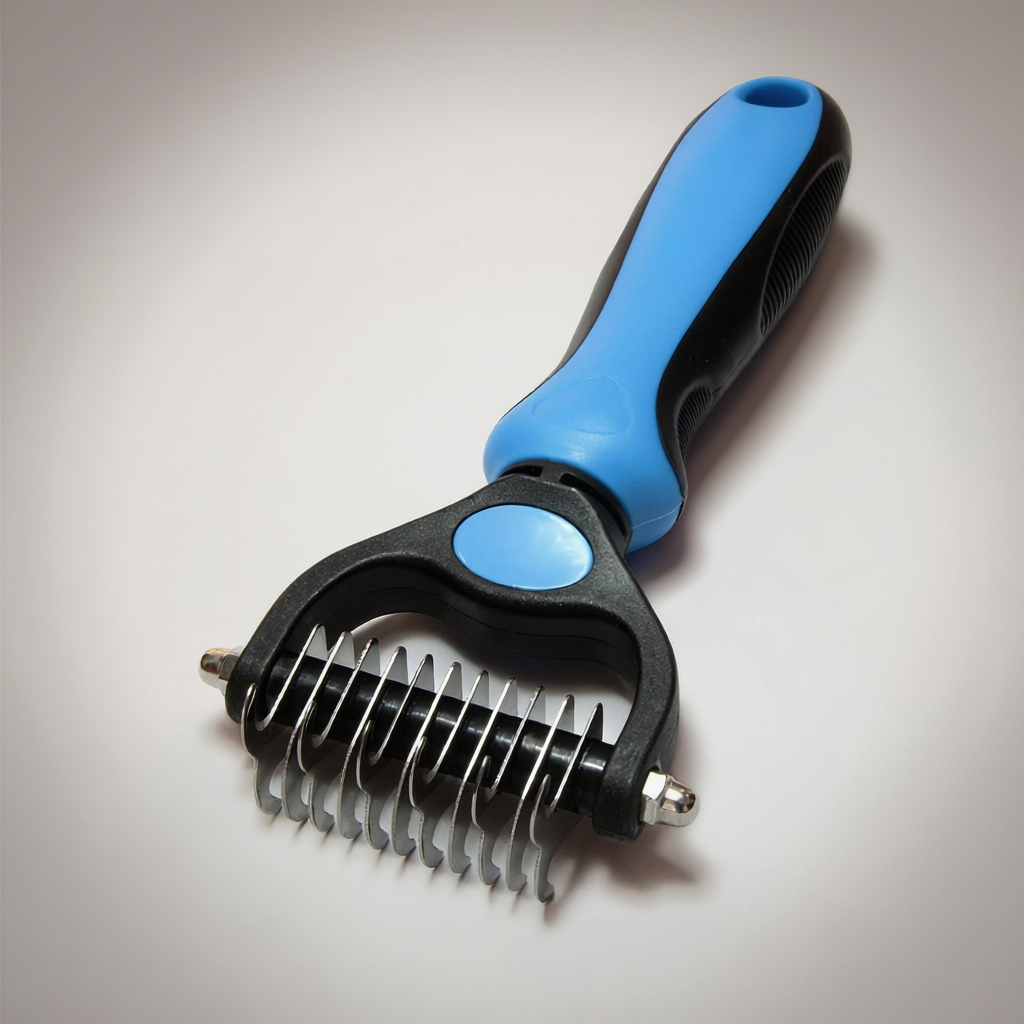
Quick answer: Match the routine to the coat, not the calendar. Short coats generally do well with a light weekly session; long coats need several short sessions a week worked in small parts; double coats need regular undercoat attention, stepped up during seasonal shedding. Always brush dry fur with light pressure — and let a veterinarian look at any skin problem before you brush over it.
There is no single correct brushing schedule, because there is no single coat. A Boxer, a Shih Tzu, and a Husky are wearing three different garments, and each one asks for different care. This guide covers the three broad coat families we hear about most, with honest notes on which of our tools fits each — and which does not.
First, identify the coat you are working with
Short single coats lie close to the body with no woolly layer underneath. Long coats grow past a few inches and tangle where friction happens — behind ears, under legs, beneath any harness or clothing. Double coats stack a dense, soft undercoat beneath weather-resistant guard hairs; these are the coats that "blow" spectacularly as seasons change. Mixed-breed dogs can land anywhere in between, so go by what you see and feel, not just the breed label.
Short coats: less is more
Short coats still shed — the hairs are just smaller and stickier on upholstery. A gentle session roughly once a week is a reasonable baseline for many short-coated dogs, using a soft tool with light pressure. Honesty about our own catalog: our best-selling double-sided grooming brush is built for long, wiry, and double coats, and its listing says plainly that it is not designed for short single coats, where an undercoat rake can pull needlessly. For a short coat, the fine side of our dual-sided grooming brush ($14.99), used gently for surface hair and dirt, is the closer match.
Long coats: work in sections, win in minutes
Long coats mat from the skin outward, so surface-level swipes just polish the top of a forming knot. Work in small sections: lift the coat, start at the ends, and move toward the skin with short strokes. The 9-tooth dematting side of the double-sided brush is made for this — wider-spaced teeth that break up knots with controlled passes. When a knot loosens, switch to longer strokes. Several brief sessions a week beat one marathon; most tangles are a two-minute fix on day one and a shave-it-off problem by week three.
Double coats: the undercoat is the real job
With double coats, the visible guard hairs are rarely the problem — the dense undercoat beneath is where loose fur accumulates. After any knots are handled, flip to the brush's 17-tooth deshedding side and work with the direction of growth in steady, light passes, clearing the head often. The listing's cadence is a sensible baseline: two to three short sessions per week, adding one more during heavy seasonal shedding. For the full season-survival plan, see our seasonal shedding guide.
| Coat type | Baseline routine | Tool from our shelf |
|---|---|---|
| Short single coat | ~1 gentle session weekly | Dual-sided brush, fine side, light touch |
| Long coat | Several short sessions weekly, in sections | Double-sided brush — 9-tooth side first |
| Double coat | 2-3 sessions weekly; +1 in shedding season | Double-sided brush — 17-tooth side |
Technique rules that apply to every coat
Brush dry fur only — the double-sided brush's own instructions say not to use it on a wet coat, and mats tighten when wet anyway. Use minimal pressure and let the rounded stainless steel teeth do the work; avoid rapid sawing motions. Slow down and shorten your strokes around the belly, armpits, and ears. End sessions before your pet wants them to end, and the next one starts easier. The non-slip rubber handle helps when an energetic dog turns grooming into a contact sport.
When brushing is the wrong tool
Brushing maintains a healthy coat; it does not treat an unhealthy one. If you find bald patches, redness, flaking, sores, or your pet flinches at touch, stop and have your veterinarian take a look before continuing any routine. The same applies to severe matting close to the skin — that is a job for a professional groomer or vet, not force.
Frequently asked questions
How often should I brush my dog, really?
As a general baseline: short coats around once a week, long coats several short sessions a week, and double coats two to three sessions weekly with an extra one during seasonal shedding. Consistency matters more than session length - a few minutes regularly beats an hour occasionally.
Which side of the double-sided brush do I use first?
Start with the 9-tooth dematting side on any knotted areas, using short controlled strokes. Once the coat is knot-free, switch to the 17-tooth deshedding side and work in the direction of hair growth to lift loose undercoat.
Can I brush my dog right after a bath?
Brush before the bath, not after. The brush is not meant for wet fur, and tangles tighten when soaked. Let the coat dry fully before any deshedding work.
Is the same brush safe to use on my cat?
Yes - the double-sided brush is designed for both dogs and cats with long, wiry, or double coats. Use the same rules: dry coat, light pressure, and extra care on sensitive areas.
My dog has flaky or irritated skin. Should I keep brushing?
Pause and consult your veterinarian first. Flaking, redness, bald spots, or pain during brushing can signal a skin condition that grooming could aggravate. Resume your routine once your vet has ruled out or treated the underlying issue.
More from the Pup R Us blog
- How to use a dematting & deshedding brush the right way
- Managing seasonal shedding at home
- The gear our customers actually buy most
- Shop all grooming & health
Prices are current as of publication and may change — see each product page for the latest details. Coat-care guidance here is general and not veterinary advice; consult your veterinarian about skin issues, severe matting, or anything that seems off.