
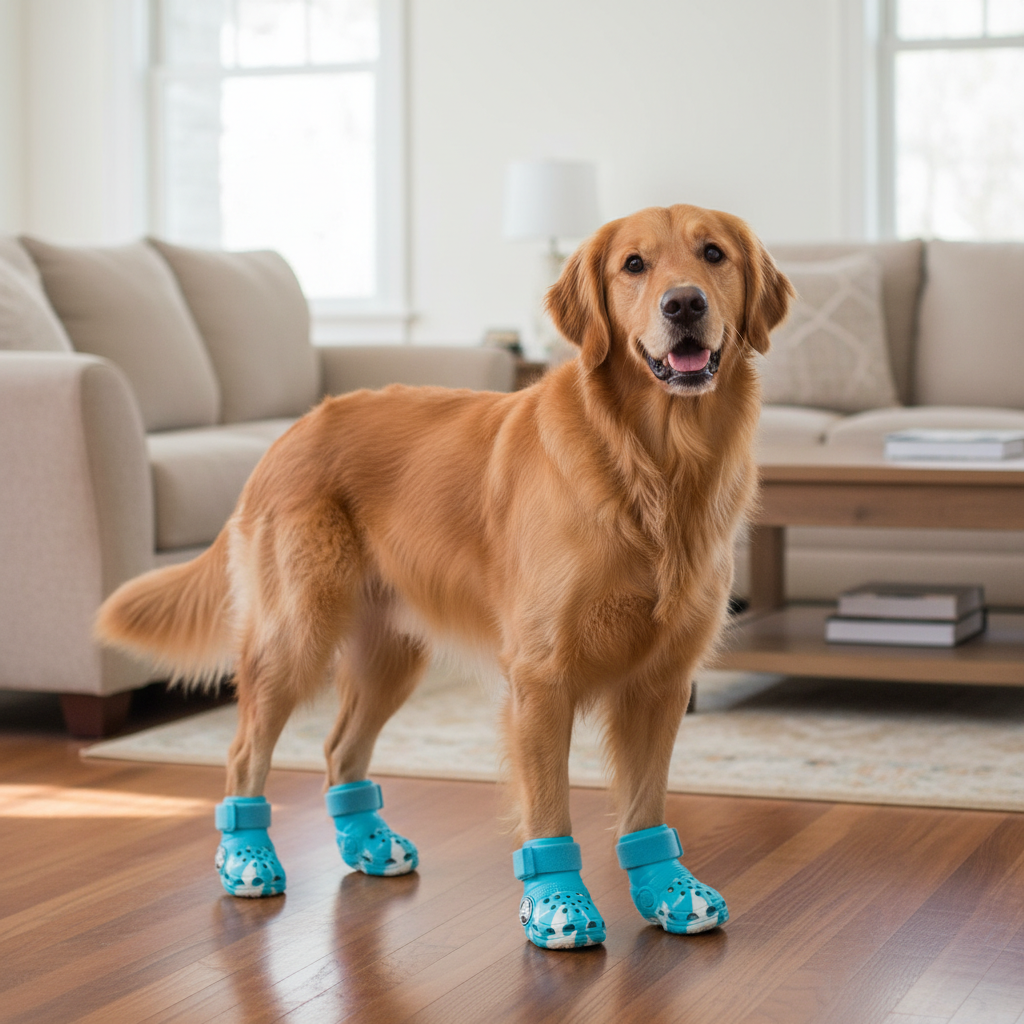
Quick answer: Most dogs don't need shoes most of the time — paw pads are tough. But hot summer pavement, winter salt and grit, rough surfaces, and slippery indoor floors are real cases where coverage helps. Our answer is the Pack of 4 Dog Shoes ($29.99): lightweight EVA clogs with ventilation holes and an adjustable strap, in sizes S–L. 15 sets sold since mid-January 2026.
Dog shoes look faintly ridiculous right up until the day you touch a sun-baked sidewalk in July, or watch your dog tiptoe across road salt in January. This guide covers when footwear genuinely earns its place, when it doesn't, and how the one shoe product in our top sellers is built.
When shoes genuinely help
| Situation | Why coverage helps |
|---|---|
| Hot pavement | Asphalt in summer sun gets far hotter than the air. A widely used rule of thumb: press the back of your hand to the pavement — if you can't hold it there comfortably for several seconds, it's likely too hot for bare pads. |
| Winter salt & grit | De-icing salt and sharp grit lodge between toes and irritate pads; a shoe simply keeps them off the paw. |
| Rough or littered ground | Gravel, hot sand, or urban debris — a sole takes the contact instead of the pad. |
| Slippery indoor floors | The listing's textured sole is designed to improve grip on smooth tile and wood — a practical aid for dogs that skate on hard flooring. |
| Travel & unfamiliar terrain | Consistent paw coverage in places where you can't vet every surface in advance. |
And the honest flip side: a healthy dog on grass, dirt paths, and mild-temperature sidewalks does fine barefoot — that's what pads are for. Shoes are situational equipment, not a default.
One clear boundary: injuries are vet territory
Shoes prevent contact with hostile surfaces; they do not treat anything. If your dog's pads are cracked, burned, bleeding, or your dog is limping or licking a paw persistently, that is a veterinarian conversation, not a footwear purchase. Never use a shoe to cover up a problem you haven't had diagnosed.
What the 4-pack actually is
The Pack of 4 Dog Shoes With Adjustable Strap ($29.99) takes the clog approach: a molded EVA foam body — the same lightweight, cushioning foam used in human footwear soles — with ventilation holes through the body, a textured grip sole, a rounded toe, and a strap that cinches over the top of the paw. You get four shoes per set, in sizes S, M, and L across six colorways. Because the shape is symmetrical, there's no left or right: any shoe fits any paw, which makes the daily putting-on routine faster.
Why the strap and vents matter
The two failure modes of cheap dog shoes are flying off and stewing the paw. The adjustable strap addresses the first: slip-on clogs held by friction alone tend to launch mid-zoomie, while a cinched strap gives a mechanical hold the gait can't dislodge. The ventilation holes address the second: enclosed boots trap moisture and heat, and the airflow through the clog body keeps longer wear more comfortable, particularly in warm weather.
Sizing and the acclimation dance
Measure the paw while your dog is standing — paws spread under load, and the weight-bearing width is the one that has to fit. Compare length and width to the listing chart, and round up if you land between sizes; slightly roomy disrupts a dog's stride less than tight. Then expect comedy: nearly every dog high-steps like a show pony on first wear. Start indoors, a few minutes at a time, with treats flowing, over several days. If your dog still fights the shoes after a patient introduction, respect the vote — footwear isn't for every dog.
Cleaning is genuinely easy
EVA foam doesn't absorb much, so care is a wipe with a damp cloth, a rinse when muddy, and air drying in the shade — keep them away from direct heat. Two maintenance habits from the listing: dig the dirt out of the sole grooves so the grip texture keeps working, and check the straps for wear now and then.
Frequently asked questions
Does my dog actually need shoes?
Only situationally. Hot pavement, road salt, rough ground, and slippery floors are the honest use cases. On grass and mild sidewalks, healthy paws do fine bare. If pads are already damaged or your dog is limping, see your veterinarian rather than buying footwear.
How do I measure for the right size?
Measure paw length and width while your dog is standing, because paws spread under weight. Match against the size chart on the listing, and if you fall between sizes, round up - slightly large disturbs the gait less than too tight.
Are all four shoes the same, or left and right specific?
All four are identical - the rounded toe and centered strap are symmetrical, so any shoe goes on any paw. No sorting before walks.
How do I get my dog used to wearing them?
Short indoor sessions first, a few minutes at a time with treats, building up over several days. High-stepping at first is normal and usually fades. If your dog still refuses after a patient introduction, do not force it.
How do I clean them?
Wipe with a damp cloth after use, rinse with clean water when needed, and air dry in the shade away from direct heat. Clear dirt out of the sole grooves so the textured grip keeps doing its job.
More from the Pup R Us blog
- Dressing dogs for hot weather — light layers and sun cover
- First-week puppy gear — a checklist from real orders
- The gear Pup R Us customers actually bought in 2026
- Shop walking & training gear
Sales figures cover orders from January 16 to July 16, 2026. Prices are current as of publication and may change. This article is general information, not veterinary advice — consult your veterinarian about paw injuries or persistent paw problems.