
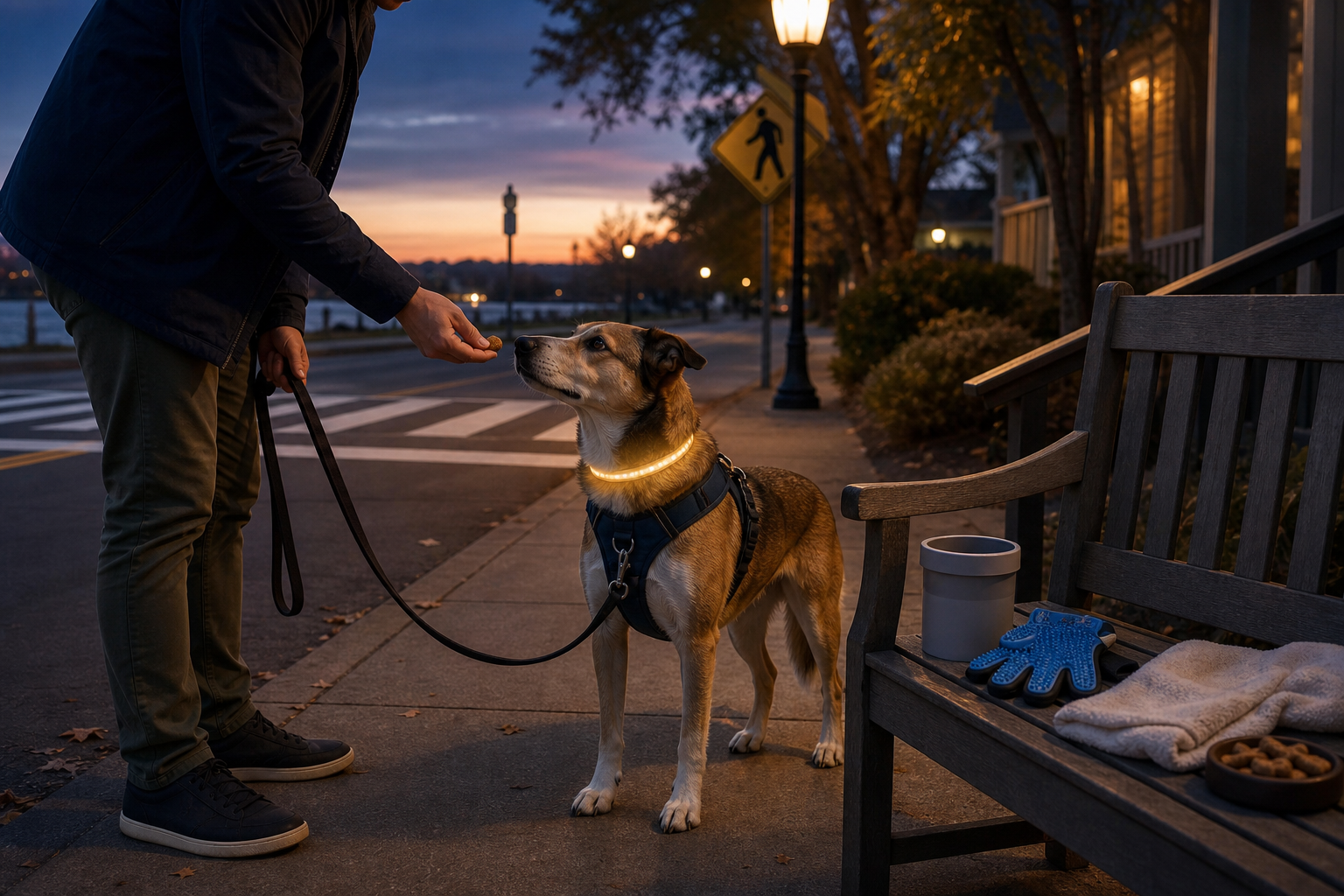
The short answer: a safer low-light dog walk uses layers: a correctly fitted walking harness and leash for physical control, visibility equipment for detection, a planned route, and reward-based handling. An LED collar can supplement visibility, but it does not make a dog visible from every angle, illuminate hazards, replace a leash or harness, or guarantee that a driver will stop. After the walk, inspect paws and coat calmly; introduce cleaners and grooming tools with treats and stop if the dog shows fear, pain or escalating distress.
This Pup R Us checklist focuses on humane, practical preparation. It does not recommend electronic shock collars, prong collars, choke chains, leash jerks or intimidation. The American Veterinary Society of Animal Behavior recommends reward-based methods for all dog training and says aversive methods should not be used.
Pre-walk visibility and fit checklist
| Check | What good preparation looks like | Important limitation |
|---|---|---|
| Harness fit | Secure without pinching; straps lie flat; dog can walk and breathe normally | A size label cannot replace checking the individual dog's body |
| Leash and clips | No fraying, cracks, bent hardware or partly closed gates | Visibility gear is not a restraint |
| LED collar | Charged, functioning and fitted according to its instructions | It cannot guarantee motorists will see or yield |
| Handler visibility | Light or reflective clothing plus a flashlight when appropriate | The dog's light alone may not show the handler's outline |
| Route | Sidewalks, familiar crossings and fewer blind driveways where possible | No route removes traffic, wildlife or weather risk |
| Rewards | Small treats or another reinforcer the dog values | Do not lure a dog into a situation that is frightening or painful |
How to check a harness fit
Measure the dog as the current product page directs, then compare that measurement with the exact size chart. Do not order by breed name alone. With the harness on, check the neck opening, chest strap, girth and each buckle. Straps should lie flat rather than twist, and the harness should not rub behind the front legs or press across the throat.
Use the maker's fit instructions; the familiar “two-finger” check is only a starting point because coat thickness, strap width and body shape differ. Watch the dog walk, turn, sit and lower the head. Stop if there is coughing, gagging, altered gait, chafing, freezing, repeated scratching, escape attempts or pain. Ask a veterinarian about fit if the dog has respiratory, neck, skin or mobility concerns.
The active Ziggy Padded Heavy Duty Pet Harness offers a catalog example to compare, while the Adjustable Vest Chest Harness is another shape. Verify the exact measurements, materials, attachment points and supplied components on the selected listing; do not assume two harnesses fit or function identically.
Use an LED collar as one visibility layer
The Ziggy LED Dog Collar is a visibility accessory in the live catalog. Test it before leaving, follow its charging and weather-use instructions, and inspect for cracks, heat, swelling or damaged connections. Do not attach the leash to a light collar unless that exact item is expressly designed and rated as a restraint. In this checklist, the leash remains attached to the properly fitted harness.
NHTSA advises pedestrians to be visible in low light, use a flashlight at night and wear reflective or retroreflective materials. Apply that advice to the handler as well as the dog. A light source on a dog's neck can be blocked by fur, body position, clothing, landscaping or parked vehicles. Reflective elements on the handler and leash plus a flashlight can give road users a clearer moving outline.
Visibility is not right-of-way. Use sidewalks where available, cross at predictable locations, obey signals, pause at driveways, and make eye contact with drivers when possible. If there is no sidewalk, follow the law and safety guidance for the location; NHTSA generally advises walking facing traffic and as far from vehicles as possible.
Reward-based handling on the route
- Start below threshold. Choose a quiet time and distance where the dog can still eat, sniff and respond.
- Mark voluntary check-ins. Reward the dog for looking back, walking near you or calmly noticing a trigger.
- Create distance early. Cross the street or turn away before the dog becomes overwhelmed.
- Keep the leash loose when safe. Avoid jerking, dragging or using tension as punishment.
- Let the dog opt out. If the dog freezes, cowers, repeatedly refuses food, lunges or tries to flee, leave the situation rather than forcing exposure.
AVSAB states that reward-based training is safer and more effective and that aversive tools can carry welfare and relationship risks. For persistent fear, aggression, panic or sudden behaviour change, consult a veterinarian and a qualified reward-based behaviour professional. Equipment is not a substitute for diagnosis or an individualized behaviour plan.
Post-walk paw check and cleaning
At the door, look for cuts, swelling, heat, tenderness, cracked pads, lodged grit, ice, burrs or chemical residue. If a paw is bleeding, very painful, swollen, burned, or the dog will not bear weight, contact a veterinarian rather than relying on a cleaner.
The SoftClean Dog Paw Cleaner is a live product option, but suitability depends on paw size, condition and the dog's comfort. Introduce the empty cup first: reward looking at it, then brief voluntary contact. Add water only at a comfortable temperature and only if appropriate for the substance being removed. Never force a sore paw into a cup, scrub aggressively or use household chemicals.
Rinse and dry between the toes carefully. Persistent redness, odour, licking or discharge warrants veterinary advice. In winter or after exposure to road salt or de-icers, follow local veterinary guidance because residues and ingestion risks vary.
Introduce grooming without force
The Ziggy Pet Grooming Glove can be introduced in short sessions. The RSPCA recommends reward-based methods to help dogs become accustomed to grooming equipment and notes that some dogs dislike having particular areas, including paws, touched.
- Place the glove nearby and reward calm investigation.
- Touch the shoulder briefly with an ungloved hand, reward, and stop.
- Wear the glove without brushing; reward relaxed behaviour.
- Make one gentle stroke in an area the dog already enjoys, then reward.
- Build duration gradually while monitoring skin and coat.
Stop for tucked posture, whale eye, repeated lip licking, growling, snapping, escape attempts or skin pain. A growl is information, not disobedience to punish. Mats close to the skin, wounds, parasites or painful areas should be handled by a veterinarian or qualified groomer.
What this checklist does not promise
- An LED collar improves conspicuity but cannot prevent a collision or replace attention and route choice.
- A harness does not automatically stop pulling, fit every body or prevent escape.
- A paw cleaner does not treat infection, burns, allergies or injury.
- A grooming glove does not replace veterinary dermatology care or safe mat removal.
- No product here replaces identification, current contact details, a leash where required, or local laws.
Frequently asked questions
Should the leash attach to the LED collar?
Use the attachment point specified for the exact product. For this layered checklist, attach the leash to a properly fitted walking harness and treat the LED collar only as supplementary visibility equipment.
Can a bright collar make night walking safe by itself?
No. It does not guarantee detection or yielding. Combine it with handler visibility, a flashlight, safer routes, crossings and active attention.
How tight should a harness be?
Follow the maker's fit directions and size chart, then observe movement and skin contact. It should be secure without throat pressure, rubbing, restricted gait or escape gaps.
What if my dog refuses paw cleaning?
Stop forcing the interaction. Use gradual reward-based steps and seek professional help if fear is intense. Pain or a sudden change in tolerance needs veterinary assessment.
Are shock collars a humane shortcut for walking problems?
No. AVSAB recommends reward-based methods and says electronic shock collars and other aversive methods should not be used. Seek humane professional guidance for behaviour concerns.
Bottom line
Prepare for low-light walks with a fitted harness, sound leash, charged visibility gear, visible handler and predictable route. Reward the behaviour you want, create distance from stressors, and let the dog opt out. Finish with a calm paw and coat check, using tools only at the dog's pace and within their stated limits.