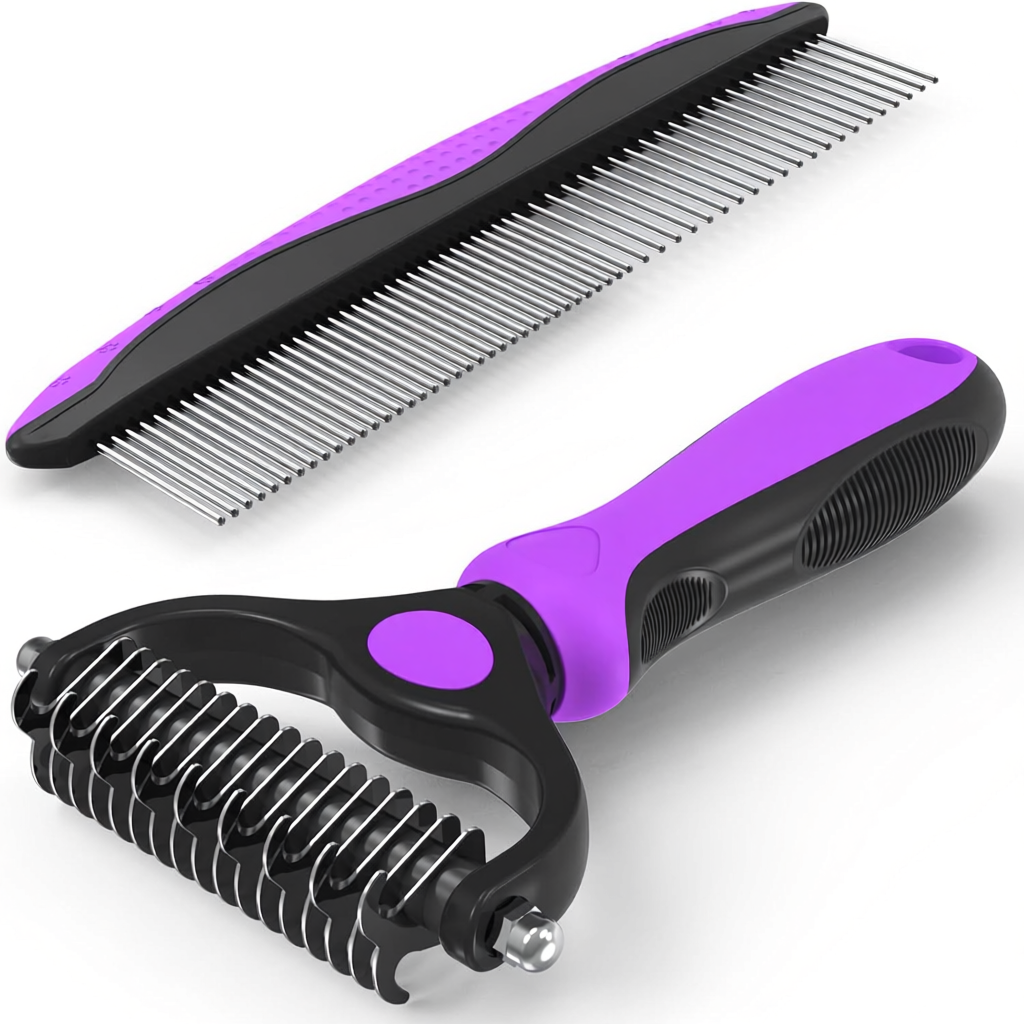
This pet grooming brush set pairs a dual-sided undercoat rake with a metal pet comb. It handles daily shed, seasonal blowouts, and stubborn tangles. The tool geometry aims for smooth passes and consistent results. Rounded tines guide through coats with fewer snags. Short sessions across the week keep grooming simple and manageable.
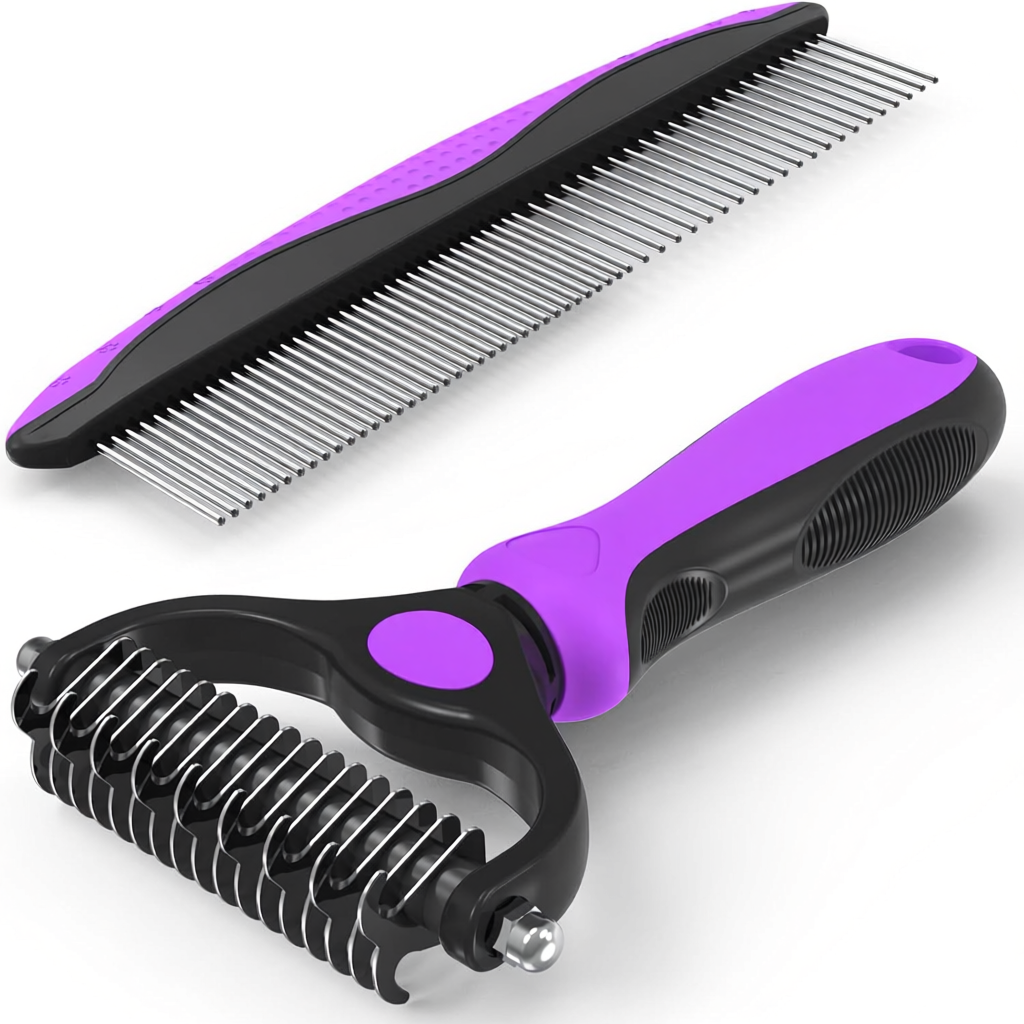
The design focuses on versatility. The rake offers a wide side for dematting brush for pets tasks. The dense side targets loose undercoat on thick fur. The companion comb completes detail work on countenance fringes and feathering. Use it for finishing, parting, and quick spot checks.
Each Pet grooming brush set suits home routines and travel grooming. The handles feel balanced during steady strokes. Pins resist rust and wipe clean after use. Add this pair to your daily kit for sheds, shows, and quick touch-ups.
Features
- Dual-sided undercoat rake for wide and dense coverage.
- Deshedding rake for dogs to manage seasonal blowouts.
- Detangling comb for cats for finishing and light styling.
- Rounded stainless tines for smoother coat contact.
- Balanced handles for confident, repeatable strokes.
- Easy-clean design with rinse-and-wipe care.
- Works on short, medium, and long coats.
- Suits home routines and travel kits.
Suitable For
- Double-coat breeds during heavy shed cycles.
- Long-coat companions prone to knots and mats.
- Short-coat pets needing quick weekly upkeep.
- Multi-pet homes requiring flexible tools.
- Show prep and between-visit maintenance.
- Up-to-date caretakers building a simple routine.
Specifications
- Set Pieces: Dual-sided undercoat rake + metal comb
- Materials: Stainless tines, TPR handle, ABS frame
- Sides (Rake): Wide for mats, dense for shed
- Sides (Comb): Wide for sections, fine for loose fur
- Use Range: Cats and dogs, short to long coats
- Power Source: Manual
- Finish: Corrosion-resistant metal tines
- Cleaning: Rinse, wipe, and air dry
- Storage: Hang loop and compact footprint
- Category Tags: grooming comb and brush, undercoat rake tool
Care Instructions
- Rinse tines after each session to remove dander.
- Pat dry with a lint-on the house cloth.
- Air dry fully before storage.
- Avoid harsh solvents and abrasive pads.
- Comb in the direction of coat growth to limit snagging.
- Tackle knots with short, gentle strokes.
- Inspect tines regularly and replace worn tools.
- Store in a dry space away from heat.
How to Use
- Start with the undercoat rake tool on the wide side.
- Work in small sections with light pressure.
- Switch to the dense side for loose undercoat.
- Finish with the metal pet comb for detail areas.
- Lift sections to check for hidden knots.
- Shake out gathered fur between passes.
- Repeat weekly, increasing frequency during shedding peaks.
- Loose fur reduces across rooms and car seats.
- Mats break down into manageable strands.
- Coats look tidy with fewer stray clumps.
- Bath time dries faster due to less trapped undercoat.
- Daily cleanup becomes a brief task, not a project.
Why Choose This Pet Grooming Brush Set
This Pet grooming brush set replaces multiple single-use tools. The dual-sided rake handles bulk removal quickly. The comb refines and smooths remaining areas. Rounded tines aim for gentle contact on dense or fine coats. Handles balance well, supporting accurate strokes. Maintenance stays easy with rinse-and-wipe care.
The kit aligns with efficient home routines. It scales from quick touch-ups to seasonal overhauls. It fits travel totes and grooming drawers. Results stay consistent across different coat types.
- Brush before bathing to remove excess shed.
- Use short strokes on knots; do not rush.
- Work from ends toward the base of tangles.
- Keep a small bin nearby for collected fur.
- Pair sessions with calm cues and treats.
- Track grooming intervals on a simple calendar.
Maintain tidy coats with a compact, effective pair. The dual-sided rake moves shed quickly. The metal comb finishes detail work with care. Weekly sessions keep knots away and reduce household fur. Add this two-piece kit to your routine for clean, consistent results across seasons and coat types.
Frequently Asked Questions
Why is the metal comb included in this set rather than a second brush, and what tasks is it specifically for?+
The metal comb handles detail work that a wide-toothed rake cannot reach effectively — face fringes, feathering on ears and legs, parting coat sections to check for hidden knots, and final finishing passes to align strands. Using the rake first removes bulk shed and mats, then the comb refines the remaining coat to a tidy finish. Together they replace three or four single-purpose tools.
What is the difference between the wide side and dense side of the undercoat rake?+
The wide side spaces the tines further apart to work through matted areas and dense coat with controlled passes without snapping hair. Use it first when the coat is tangled. The dense side packs more tines into the head to catch and lift loose undercoat fibers across the whole coat once tangles are cleared. Switching between sides in sequence gives more complete results per session.
How do the stainless tines stay rust-resistant over time, and what care routine supports that?+
The tines are made from corrosion-resistant stainless steel. After each session, rinse the tines to remove dander and coat oils, pat dry with a lint-free cloth, and allow them to air dry fully before storage. Storing while still damp or in a humid environment accelerates surface oxidation even on stainless grades. Keeping the tools in a dry space away from heat maintains the anti-rust properties over multiple seasons.
How should I approach a coat that has not been brushed in several weeks and has developed mats?+
Start with the wide dematting side of the rake on small isolated sections. Hold a section of coat with one hand to stabilize it and work from the tip toward the base of the mat with short strokes rather than long passes. Do not attempt to force through a dense mat in a single pass. Once the section loosens, switch to longer strokes toward the skin. Complete one section before moving to the next.
Does this set work on cats as well as dogs, or is it optimized for one species?+
The product is listed for both dogs and cats. Pup R Us notes it suits short, medium, and long coats across both species. For cats, lighter pressure is typically needed because feline skin is thinner and more sensitive than most dog breeds. Start with the comb on cats to check for resistance before moving to the rake, particularly in areas where cats are most sensitive, such as the belly and inner legs.

-5.png?w=1024&h=1024)
-4.png?w=1024&h=1024)
-4.png?w=1024&h=1024)
-2.png?w=1024&h=1024)
.png?w=1024&h=1024)
.png?w=1024&h=1024)
-3.png?w=1024&h=1024)
-2.png?w=1024&h=1024)
-5.png?h=1024&q=80&w=1024)
-4.png?h=1024&q=80&w=1024)
-4.png?h=1024&q=80&w=1024)
-2.png?h=1024&q=80&w=1024)
.png?h=1024&q=80&w=1024)
.png?h=1024&q=80&w=1024)
-3.png?h=1024&q=80&w=1024)
-2.png?h=1024&q=80&w=1024)