
Quick answer: Neither is "correct" — they solve different problems. A collar excels at carrying ID and staying on all day; a harness is designed to move leash pressure off the neck and onto the chest, which matters most for pullers, small breeds, and leash-learners. Our customers vote with their orders: three of the eight best-sellers at Pup R Us are harnesses. Many owners simply use both.
The collar-versus-harness debate generates a lot of heat online. The honest answer is boring: it depends on your dog, and the two aren't really competitors — one is an address tag with a buckle, the other is walking equipment. Here's a practical comparison, with what our own sales data says at the end.
Where leash pressure goes
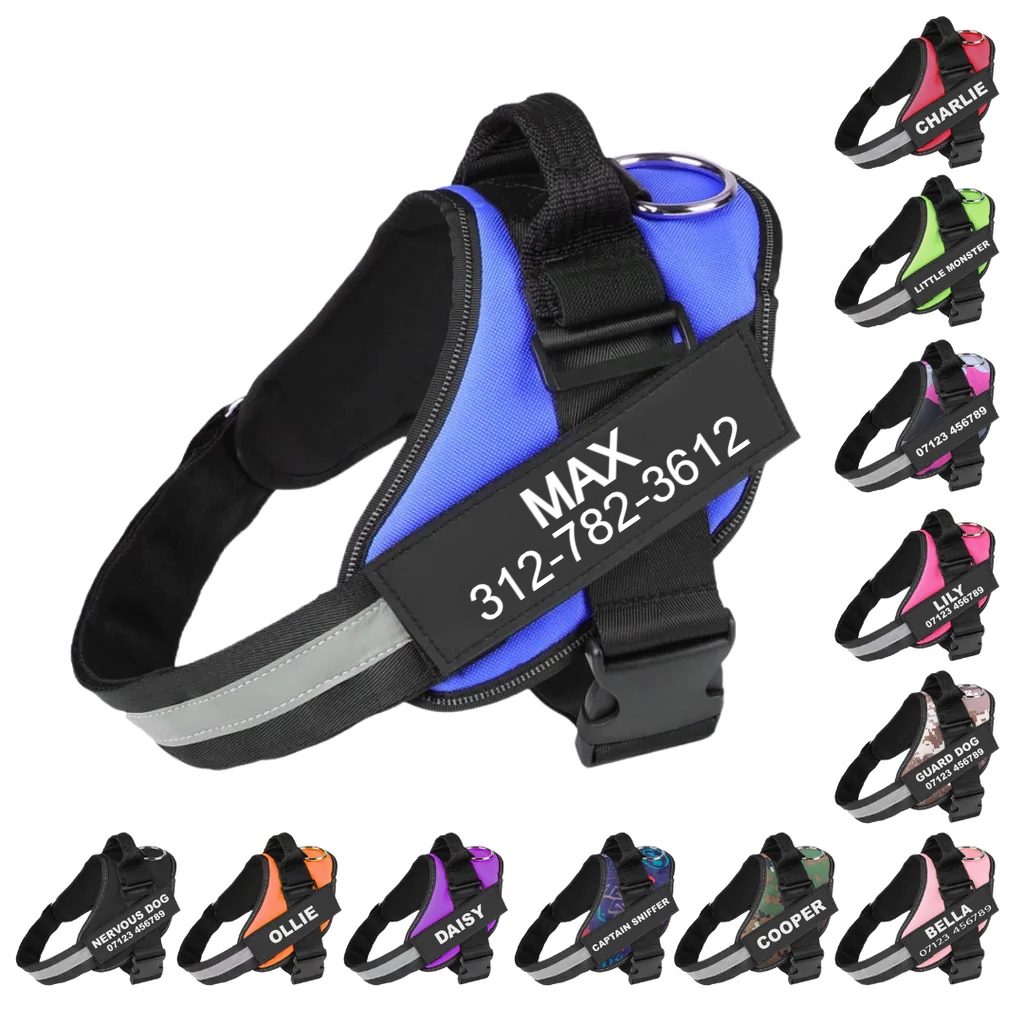
The mechanical difference is location. Clip a leash to a collar and every pull — from either end of the lead — concentrates on the neck. Clip it to a harness and that force spreads across the chest and shoulders, over cushioned straps or padded panels. Harness makers design around exactly this: our personalized no-pull harness ($19.99) wraps the body precisely so the neck isn't the anchor point. For a dog that walks politely on a slack lead, the difference rarely shows. For a dog that lunges at squirrels, it shows on every walk.
What collars still do best
A collar lives on the dog around the clock, which makes it the natural carrier for identification — and daily-wear comfort is the reason most dogs wear one even in harness households. Worth knowing: the one collar in our current top sellers, the crystal cuban chain collar ($9.99), is explicitly a styling piece — its own listing says it is for photos and light supervised outings, not for tension or pulling. That candor is a useful reminder that not every collar is leash equipment.
What harnesses unlock
Beyond moving pressure off the neck, harnesses add control features collars physically can't. Front chest clips — on our tactical harness ($32.99) and adventure harness ($50.99) — redirect a pulling dog back toward the handler, a standard leash-manners training technique. Grab handles allow instant close control near traffic. Escape-resistant vest shapes, like the soft mesh harness ($9.99) uses, are the answer for pets that back out of collars. And our personalized harness prints a name and phone number on the vest itself — ID without a dangling tag.
Side by side
| Collar | Harness | |
|---|---|---|
| Leash pressure | Concentrates at the neck | Designed to spread across chest and shoulders |
| All-day wear | Standard — carries tags | Usually worn for walks, off at home |
| For pullers | Hard on the neck when pulling is constant | No-pull designs and front clips built for it |
| Escape risk | Slips over the head if loose | Vest shapes resist backing out when fitted |
| Our range starts at | $9.99 (styling collar) | $9.99 (soft mesh) |
What our customers actually buy
In our 2026 best-sellers ranking, three of the top eight products are harnesses — the personalized no-pull (77 units), the soft mesh (18), and the tactical (15). The pattern in the orders is hard to argue with: when Pup R Us customers buy leash-walking gear, they overwhelmingly choose harnesses, while collars sell as style and ID pieces. Our harness comparison guide breaks down which of the three fits which dog.
The both-and answer
The setup many experienced owners land on: a comfortable collar worn full-time for ID, plus a harness that goes on for walks. You keep the always-on identification and the neck-friendly leash mechanics, and the two never conflict — a harness fits fine over or alongside a collar. If your dog has an existing neck, throat, or breathing concern, skip the internet debate entirely and ask your veterinarian what walking equipment they recommend for that specific dog.
Frequently asked questions
Is a harness better for a puppy learning to walk on a leash?
Many owners start puppies on a harness because early leash lessons involve a lot of sudden stops and lunges, and a harness keeps those jolts off the neck. Our soft mesh harness starts at XXS with straps that adjust as the puppy grows.
Can my dog wear a collar and a harness at the same time?
Yes, and that is the most common setup: the collar stays on full-time carrying ID, while the harness goes on for walks and takes the leash. They occupy different real estate and do not interfere with each other.
Which harness should a strong puller get?
The tactical harness is our structured option for strong pullers - padded side panels spread the force, and the front chest clip redirects pulling during training sessions. The full comparison is in our no-pull harness guide.
Do collars hurt dogs?
A well-fitted collar on a calm walker is a non-issue for most dogs. The concern is constant hard pulling, which concentrates force on the neck walk after walk. If your dog pulls persistently or has any neck or breathing concern, use a harness for leash work and ask your veterinarian for guidance.
Is the cuban chain collar suitable for daily leash walks?
No - its own listing positions it for styling, photos, and light supervised outings, not tension use. If you like the look, wear it as an accessory and clip your leash to a proper harness.
More from the Pup R Us blog
- No-pull dog harnesses compared — personalized vs mesh vs tactical
- The soft mesh harness for small dogs and cats — a closer look
- The tactical no-pull harness — front and top clips explained
- Shop all dog harnesses
Sales figures cover orders from January 16 to July 16, 2026. Prices are current as of publication and may change. This article is general information, not veterinary advice — for a dog with health concerns, consult your veterinarian about walking equipment.